Leading Forward: ESA Celebrates Growth, Advocacy, and Momentum at the 2026 Annual Meeting
The Electronic Security Association’s Annual Meeting has always served as more than a governance requirement. It is a snapshot of where the industry stands, what it has accomplished, and where it is headed next.
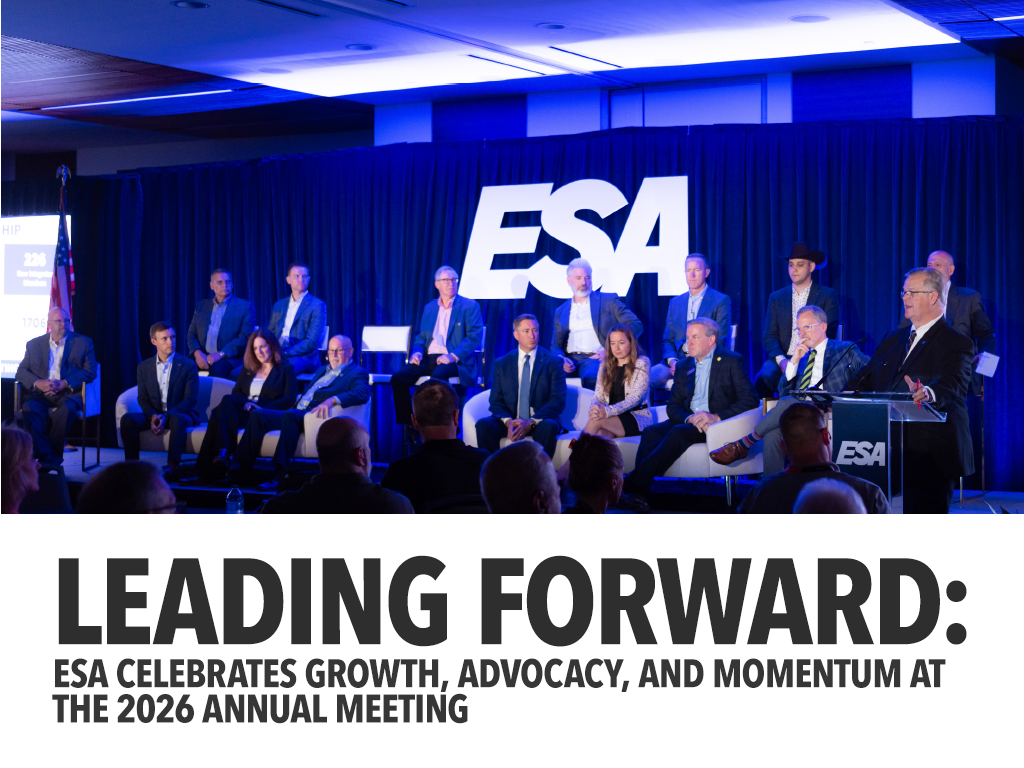
This year’s meeting, held during ESX 2026 in Irving, Texas, delivered all three.
Against the backdrop of a rapidly evolving security landscape, ESA members gathered to celebrate another year of organizational growth, recognize the volunteers and advocates helping shape the industry’s future, and witness the transition of leadership from outgoing Chairman Kevin Stone to incoming Chairman Jeremy Bates.
The themes that emerged throughout the afternoon were familiar to anyone paying attention to the industry’s trajectory: workforce development, advocacy, education, volunteer leadership, and the importance of maintaining a unified voice for electronic security and life safety professionals.
As Chairman Stone reflected on the association’s progress, one message stood out above all others: ESA’s momentum continues to be powered by the people who invest their time, expertise, and resources in advancing the profession.
A Strong Foundation for Growth
ESA enters its new fiscal year from a position of strength.
The State of the Association presentation revealed membership has grown to more than 1,700 member companies, including 246 new members added during the first five months of 2026. The association also reported strong financial performance, with year-to-date revenue exceeding budget expectations and continuing investment in member programs and services.
Those investments are increasingly focused on one of the industry’s most pressing challenges: workforce development.
The ESA National Training School continues to serve as one of the association’s most important strategic assets, reporting more than 3,300 course completions and more than 800 certifications issued so far this year. Thirty-one companies are currently utilizing volume training programs, reflecting growing demand for scalable workforce development solutions.
ESA has also expanded its curriculum to address emerging technologies and evolving job requirements. New educational content now includes Internet of Things fundamentals, rack infrastructure, cybersecurity, and data privacy—areas that have become increasingly important as security systems become more connected and data-driven.
The message was clear: preparing tomorrow’s workforce is no longer optional. It is essential to the future success of every security and life safety company.
Advocacy Delivering Results
Few areas of ESA’s work generated as much discussion as advocacy.
Over the past year, ESA monitored hundreds of legislative proposals and launched dozens of strategic issue campaigns addressing issues ranging from workforce development and occupational licensing to artificial intelligence, school security, right-to-repair legislation, taxation, and life safety regulations.
A significant focus has been the SECURE Act (Safeguarding Election Candidates Using Reasonable Expenditures Act), an initiative designed to clarify the use of campaign funds for candidate security and life safety measures. Working alongside coalition partners, ESA has helped advance legislation across numerous states, with several already enacting the measure into law.
The association’s advocacy efforts also included its annual Security Hill Day, where industry leaders met directly with members of Congress to advocate for public safety priorities and the protection of critical communications spectrum resources.
For ESA members, these efforts reinforce one of the association’s most important roles: ensuring the industry’s voice is heard wherever policies are being debated and decisions are being made.
Recognizing Those Who Serve
One of the most anticipated portions of the Annual Meeting is recognizing the volunteers whose service often takes place behind the scenes.
This year, ESA honored committee leaders who have spent years advancing key association initiatives, including government relations, education, standards