
Elevator Codes Are Changing. Here Is What Dealers Need to Know About Video Monitoring.

What the ASME A17.1-2019 Code Now Requires
The updated ASME 17.1 2019 elevator safety code introduces three specific capabilities that go beyond traditional voice-only emergency communication. Elevator emergency phones must now support:
- Two-way text messaging for passengers who are hearing or speech impaired
- Video capability so emergency personnel can visually assess entrapment situations
- A display message (within the elevator) to confirm that help is on site for buildings with a rise greater than 60 feet.
These are not minor upgrades or incremental adjustments to existing infrastructure. Together, they represent a meaningful shift in what compliant elevator emergency communication looks like, and they require monitoring capabilities that most standard setups were not designed to support.
One detail that catches dealers off guard when they start digging into this: Video Messaging Systems (VMS) require an internet connection to function. This is a different connectivity requirement than the cellular or traditional phone lines that elevator emergency phones have historically relied on. If your customers do not currently have an internet connection running to their elevator equipment, that gap needs to be part of the compliance conversation, and it is a practical consideration that affects both the installation scope and the monitoring solution you point them toward.
Why Traditional Central Stations Are Not the Right Fit
Most dealers who handle monitoring work with traditional central stations built to manage fire alarms, security alarms, and access control. Those are their core priorities, and they are staffed and structured accordingly.
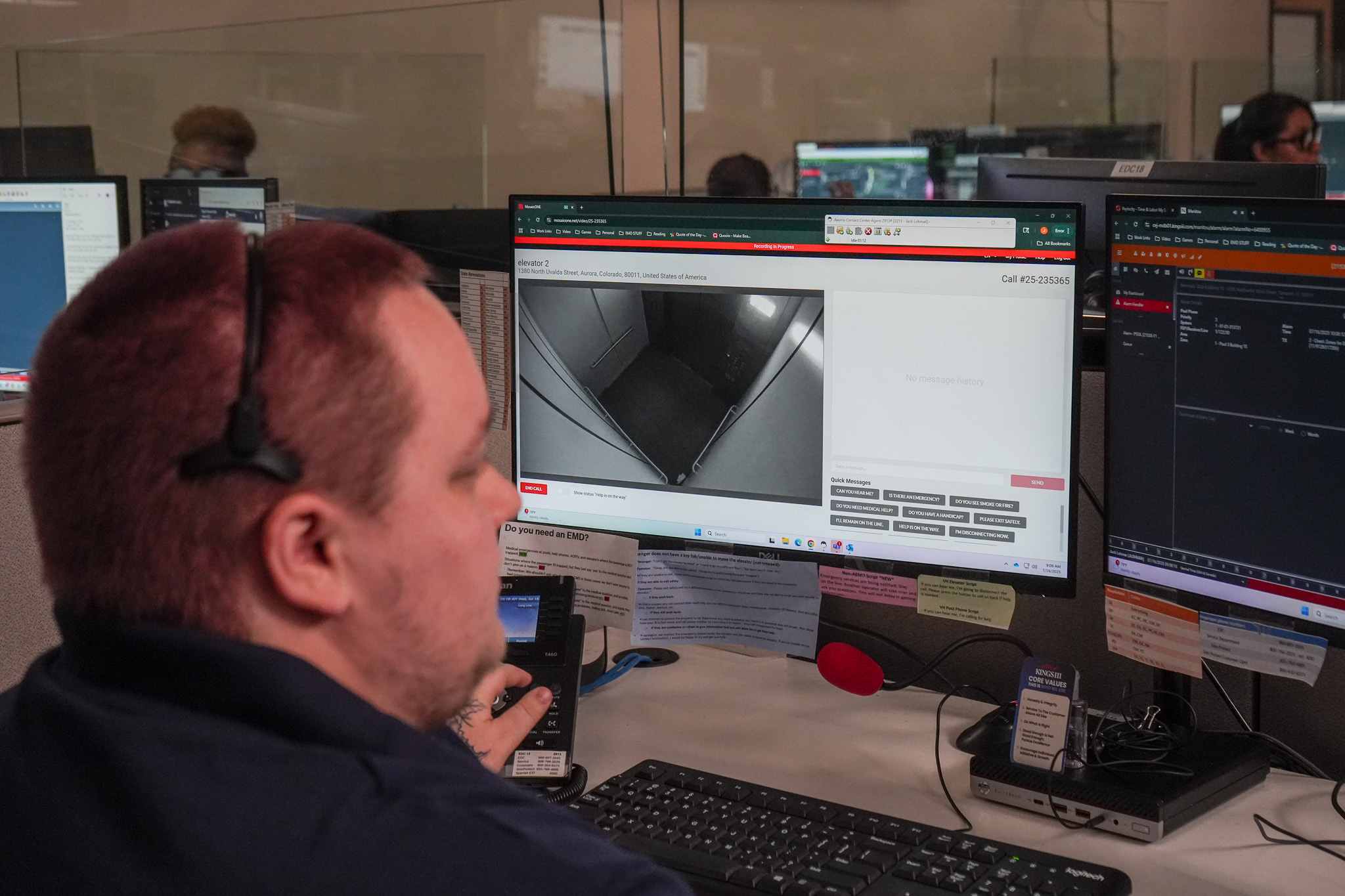
Video Messaging System monitoring for elevator phones operates differently. The equipment itself is one part of the challenge: there are multiple VMS hardware manufacturers in the market, and each runs on its own proprietary software. For a central station looking to support this, that means learning and maintaining more than one platform, training staff across systems that work differently from each other, and absorbing the ongoing operational overhead that comes with it.
On top of that, operators need to understand elevator entrapment response as its own discipline, separate from the fire and security signals that make up the bulk of their daily volume. Layering all of that onto an infrastructure that was not originally designed for it creates real friction: technology investments that may not pencil out, staff who are stretched across too many system types to develop real proficiency, and response quality that can fall short when an actual entrapment occurs.
This is not a criticism of traditional central stations. They do what they were built to do, and they do it well. The issue is that VMS monitoring for elevators is a specialty and treating it as just another signal type is where coverage gaps tend to emerge. When a passenger is trapped and the monitoring operator is not practiced in that specific scenario, the difference becomes apparent quickly.
A Path Forward for Integrators
Kings III Emergency Communications is now offering a VMS monitoring solution for elevator phones built specifically with the dealer community in mind. Our Emergency Dispatch Center operates around the clock, staffed by operators who handle elevator entrapment calls as a primary focus rather than one signal type among many. The platform is non-proprietary, meaning it works with a range of video and messaging hardware rather than locking dealers or their customers into a single equipment option. The dispatch center is also ETL Listed and certified to UL standards, which matters when customers start asking about liability documentation and call records.
For dealers looking to offer a clear, credible path to VMS compliance without building that monitoring capability in-house, Kings III is ready to help. Learn more here or reach out to Thomas Worthington at tworthington@kingsiii.com.