
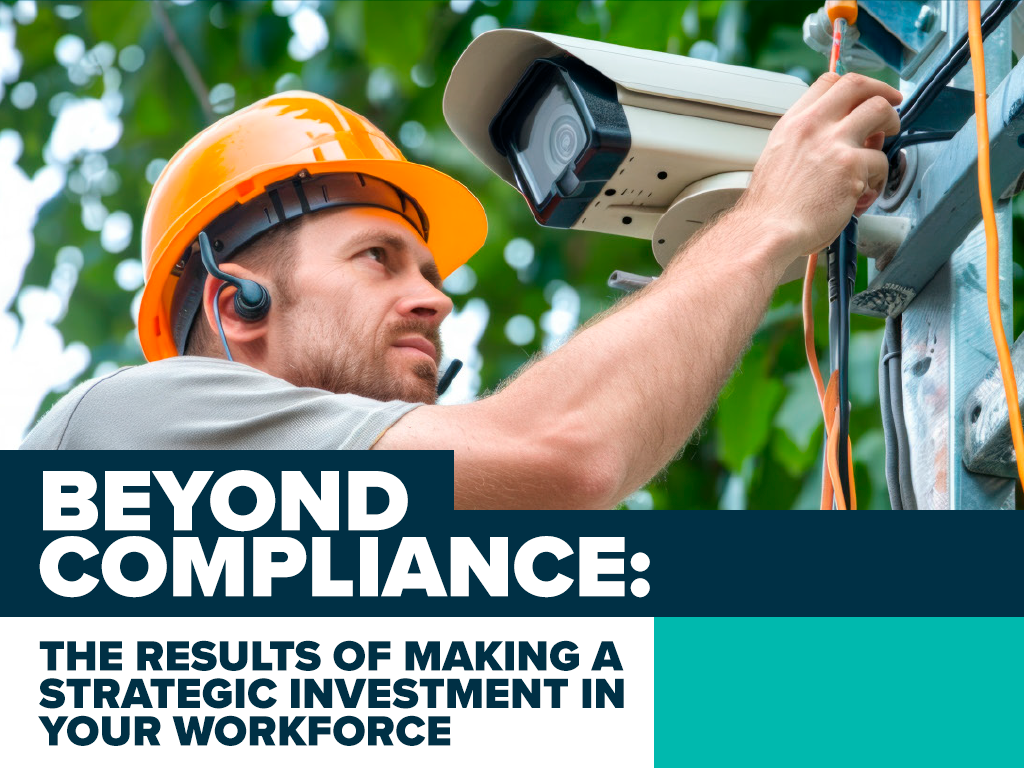
Beyond Compliance: The Results of Making a Strategic Investment in Your Workforce
By Kevin Stone, Chief Operating Officer & Executive Vice President – Doyle Security Systems, Inc.
In the fast-paced world of electronic security and life safety, technology is far from static. From AI & IP-based surveillance systems and sophisticated access control to fire alarm systems that integrate with building management, the tools technicians install and maintain change rapidly. Yet, for many companies, training is treated as a checklist item—a “one-and-done” requirement to maintain licensing or meet minimum CEU compliance standards.
This approach is a missed opportunity. While compliance training keeps the doors open, investing in advanced, ongoing technician training keeps the doors shut on high turnover and poor performance. In an industry facing a chronic talent shortage, fostering a culture of continuous learning is the most powerful strategy for strengthening retention, driving loyalty, and ensuring long-term profitability.
When training is limited to mandatory, bare-minimum requirements, technicians often feel stagnant. They may feel that their career trajectory is capped, and their skills are not being valued. In a market where skilled technicians are in high demand, this lack of development is a primary driver for employees to seek opportunities elsewhere. Furthermore, relying only on basic compliance training creates a workforce that struggles to troubleshoot advanced, interconnected systems, leading to increased service calls, reduced efficiency, and lower customer satisfaction.
Conversely, investing in training that goes beyond compliance—such as manufacturer-specific certifications, IP networking certifications, or specialized life safety training—signals to technicians that they are valued professionals, not just cost centers.
When organizations invest in their teams, it fosters a culture of excellence. Technicians feel empowered when they are equipped with the latest knowledge to handle complex projects. This shift in mindset transforms training from a boring requirement into a competitive advantage. It fosters a sense of pride in craftsmanship, reducing the likelihood of errors and fostering a proactive approach to troubleshooting.
Technicians in the security and life safety industry want to work for companies that help them evolve and grow. In a competitive labor market, offering a robust training program is a key differentiator for recruitment and, more importantly, retention.
- Loyalty and Commitment: When technicians see that their employer is investing in their personal career growth, loyalty increases. They are less likely to jump to a competitor for a marginal increase in salary if they feel their current employer is providing a clear pathway for professional advancement.
- Career Pathing: Advanced training programs allow for clear career progression from junior installer to senior technician or system designer. This, in turn, boosts morale and gives employees a long-term goal within the organization.
- Reducing Burnout: Well-trained technicians are more efficient. They spend less time on the job site trying to solve problems they haven’t been trained for. This reduces burnout and frustration, making the workplace more enjoyable.
While training requires an initial investment of time and money, the return on investment (ROI) is substantial. Highly trained technicians are more productive, faster at installations, and better at troubleshooting. This leads to fewer repeat service calls, and higher customer satisfaction—all of which directly impact the bottom line.
Moreover, a well-trained, confident team can handle more complex, high-margin projects, positioning the company as a leader in the industry rather than just another service provider.
To truly leverage training, it must be embedded in the company culture. This means moving beyond occasional workshops.
- Mentorship Programs: Job shadowing, pairing junior technicians with experienced professionals allows for the transfer of not just technical skills, but also troubleshooting techniques and best practices.
- Manufacturer Partnerships: Utilizing training resources provided by manufacturers ensures technicians are experts on the equipment they are installing.
- Internal Training Incentives: Recognizing and rewarding technicians who achieve new certifications encourages a culture of continuous improvement.
In the electronic security and life safety industry, the difference between a thriving company and a struggling one is often the skill level and engagement of its technicians. Investing in training that goes beyond compliance is not merely an expense; it is a strategic investment in the workforce. By prioritizing continuous education, companies build a stronger, more loyal team, foster a superior company culture, and ensure long-term profitability in an increasingly complex industry.