
The Landline Sunset Is Accelerating. Here Is What Dealers Need to Know About Elevator Emergency Phones.
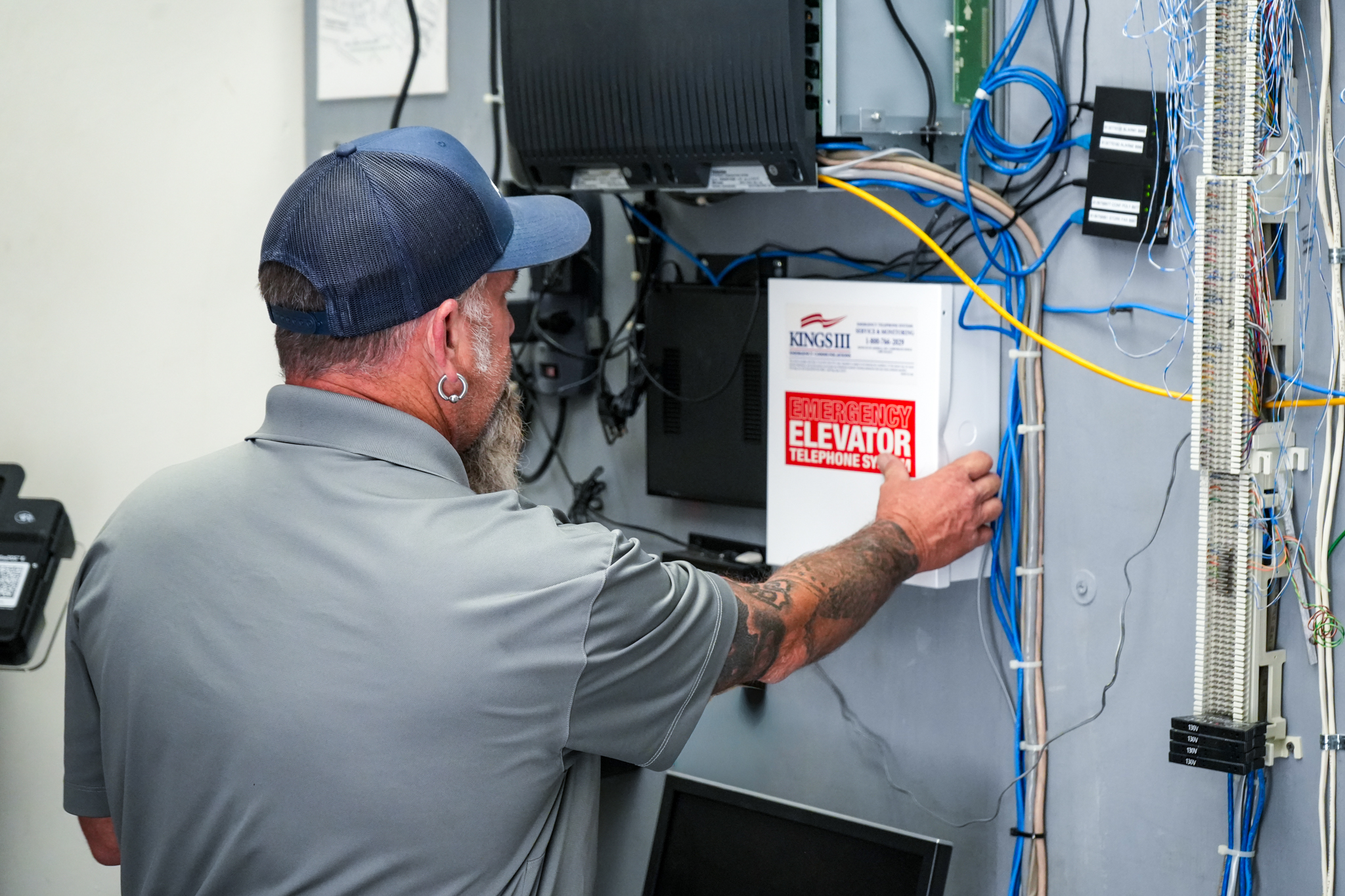
If your customers still have emergency phones running on landlines, a conversation is coming. Carriers are retiring those lines faster than most building owners expect, and the notices are already going out. For dealers who install, service, or monitor for commercial properties, that means questions about elevator emergency phones are about to land on your desk.
The question worth asking before those notices reach your customers, is what a compliant replacement actually looks like.
What the FCC Changed
On March 26, 2026, the FCC passed the Network and Services Modernization Order. It removed most of the federal process that used to slow carriers from retiring copper wire centers: the filings, the public comment periods, the months of review. In most cases, a carrier now only needs to give 90 days’ notice before service ends.
That timeline is already in motion. Some properties are receiving 90-day notices that their legacy service is being sunset. AT&T has approval to retire POTS service at more than 30% of its wire centers by the end of 2026, with full copper retirement targeted for 2029. Verizon, Frontier, and Lumen are working under the same framework. When a wire center retires, every copper line it serves stops at the same time. There is no gradual decline.
The Phone Line Everyone Forgets
Emergency phones tend to be the last thing anyone thinks about during a telecom change. They sit in elevator cabs and shaft rooms; they are not bundled with the rest of the building’s phone service, and they stay quiet until someone presses the button. Without regular testing, a disconnected emergency line can go unnoticed for months, until a passenger needs it during an actual entrapment.
There is a code consideration too. ASME elevator code requires the monitoring operator to identify the calling cab without input from the caller. A passenger who is trapped, panicked, or unable to speak cannot supply their own location. A phone that has lost its connection, or one running through a system that cannot reliably pass location data, does not meet that requirement.
Why the Replacement Choice Matters
When a property manager learns their landlines are going away, VoIP is usually the first option they consider. It is familiar; it is cheaper per line, and it is often already deployed elsewhere in the building. For office phones, that works. While VoIP can be brought into code compliance for an elevator emergency phone, a few specific issues come into play:
- VoIP depends on building power. When the router loses power, the phone goes down, which is often exactly when it is needed.
- VoIP frequently fails to pass the calling cab’s location data to the operator, which creates the compliance gap described above.
- Emergency dialers use DTMF tones to transmit location and identification data, and VoIP does not always carry those tones cleanly.
- Emergency phones sit in publicly accessible lobbies and stairwells, so connecting them to the building network introduces an access point most IT teams want to review before installation, as it often requires specialized oversight once in place.
Cellular avoids those dependencies. It runs independently of the building’s internet, router, and IT infrastructure, which is why it tends to hold up in the power outages and natural disasters that emergency phones exist for in the first place.
A Path Forward for Dealers
Kings III offers an easy, convenient solution: the Elevator Connect 1000, available to authorized dealers at dealer pricing. It runs on the LTE network, includes the four-hour battery backup ASME code requires, handles cab location identification automatically, and installs on the building’s existing copper wiring and a standard 120V AC outlet. There is no major infrastructure work and no carrier contract to manage, and Kings III provides and manages the cellular SIMs.
The point of the dealer program is that you keep your customer relationships. You install the equipment, you keep the account, and you add recurring revenue to buildings you already serve. If you run your own central station, you can keep monitoring these phones yourself. If you would rather not take on elevator entrapment response, which is its own discipline, Kings III’s Emergency Dispatch Center can handle it. Either way, the customer stays yours.
Another thing to be aware of: updated elevator code is introducing video and messaging (VMS) requirements for many of these same buildings. If a customer falls under those requirements, Kings III can support that through the same dealer program, so a single partner covers both the line replacement and the video monitoring.
To learn more about offering cellular elevator emergency phones through the Kings III dealer program, reach out to Thomas Worthington at tworthington@kingsiii.com.